

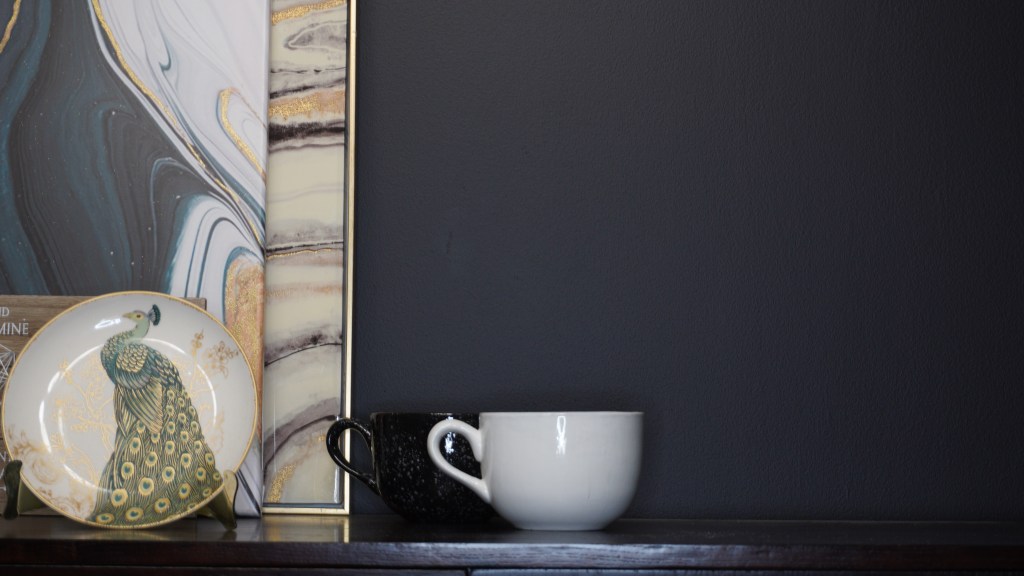


A progression of test shots, taken in preparation for production.
Reading & Writing
This week’s reading of Animated Storytelling covered Sound Ideas (chapter 7) and Design Wonderland (chapter 8). Here are some key takeaways from each chapter:
Sound Ideas: Get your audio and story in sync
- Let Sound Lead the Story: it is important to consider sound before animation. Sound shouldn’t be an afterthought. It should be part of your writing and design. Furthermore, sound should serve as the “primary compass for your storytelling.”
- Diegetic (literal sound) comes from sound sources that are visible. This sound comes from the physical world within the film.
- No-diegetic (non-literal sound) includes sound sources that are not visible and unnatural to objects in the scene.
- Sound effects are accomplished best when limited. “Restraint is key.” Overuse of sound effects can result in ineffective sound effects.
- Channel your poet. Surreal sound effects may capture your message or expression more effectively than literal sound effects.
- Music can serve as sound effects, providing an “organic feel, while also giving your entire soundtrack the feeling of synthesis.”
- Music can determine emotion, set the rhythm, and guide the journey within your story.
- Score to “theme”
- Consider the music of “silence”
- Score “against”
- Only include dialogue if it is absolutely necessary.
- Match every line of dialogue to the character’s personality.
- Characters need to speak in a real, relatable, naturalistic way.
- Have your characters speak in a way that matches the overall mood of the scene.
- Narration/Voiceover for Motion Graphics
- Clarity and brevity are key when scripting for motion graphics. Leave no room for misinterpretation.
- “Write brief, and write clear, but also write visual.”
- Perform and edit your draft multiple times to refine it.
- Once the script is recorded, determine where the music comes in.
- “The pace of the voice drives things, type sits at the center, and design is the spoonful of sugar that helps the medicine go down.”
- Ready, Set, Go: move onto design and animation
- A Final Word on Timing: “Timing is everything.” Carefully consider the placement of every cue, dialogue, sound effect, etc.
Design Wonderland: World building and environmental design
- “Animation allows you to create any chaos you want.” Once your world is introduced, you must commit to it. If you do not commit to the world you have created, you’ll lose your audience.
- Continuity is key. If you go against your world’s logic, you’ll face continuity issues.
- But First (Again): Be Influenced
- Have influences that inspire you. “Borrow ideas and inspiration from the stories that you love most.”
- Designing the Rules
- Establish your world’s time and place. Past, present, or future?
- Define the physical order
- Define the social order
- Define the visual order
- Look around! Our world is inspiring.
- On Motion Graphics & Branding
- Study the core values of the brand and establish visual rules around it.
Research
Effective Audio
Pixar’s Wind is an animated short that tells the story of a grandmother and her grandson who are trapped together in a barren land. Although there are no audible words spoken between the two, the animation’s music, ambient audio, and sound effects all work together to effectively capture and support the events taking place within the short. This clip starts with music and progresses with sound effects, followed by subtle ambient audio outside of the house and, finally, more effects that are loud and impactful.
Spiderman: Into the Spider-Verse, created by Sony, is one of my favorite animated films. Throughout the movie, you can hear conversations between the characters, overlapping ambient audio between the city, Miles’ school, and other settings, sound effects that align with the action-packed fight scenes, and so much more. This particular scene transitions back and forth between dialogue, sound effects specific to each character, the audio of the cafeteria, and the thrilling music seamlessly. There’s even quick text animations thrown into the mix while Miles and Peter swing from the trees.
Effective Text Animation
Speaking of text animation, the opening logos for Into the Spider-Verse, are animated repetitively to mimic a glitching effect seen throughout the movie. From the start of the movie, this is an effective way to hint at a common theme within the storyline.
Animated lyric videos have become popular throughout the years. Often times they consist of looping footage and words thrown on the screen. Every once in a while, however, artists use this opportunity to animate the text, which makes the lyric video an enjoyable experience for their audience.
Finally, you may not have noticed, but Apple uses text animation in a lot of their videos. Sometimes it is subtle and uniform, and, at other times, it is colorful and dynamic. Across all of their videos, you’ll find that the footage and the text do not compete with each other. Within each video, all elements coexist peacefully.
Create: Better Together
Shot on Sony a6400, Edited using Adobe Premiere Pro & After Effects.
Soundtrack downloaded from Bensound, edited by me: https://www.bensound.com/royalty-free…
All other sound effects created by me and/or sourced from the following sites:
https://www.fesliyanstudios.com/ https://freesound.org/ https://www.freesfx.co.uk/
This week, I utilized stop motion to bring my linear story idea from my last blog post to life. Initially, I wanted to focus on my nonlinear storyline which involved filling a barren greenhouse with plants shelf by shelf. I felt that my nonlinear storyline would be active, colorful, interesting, and enjoyable to create. However, upon reviewing my two storylines, I decided to challenge myself to incorporate more color and activity into my linear storyline. I experimented with and built upon my storyline, in these ways:
- Numerous household objects scuttling across the ground (tabletop) and toward the mugs with varied speeds and motion patterns
- Clouds cycling through the sky (wall)
- Sound elements including a soundtrack and multiple sound effects to drive the action within the animation
These amendments surely brightened up my piece, however, they presented additional challenges. For example, many objects within a stop motion means many focal points for the camera. It also means there will be many items to account for and manipulate. Additionally, the clouds were a last-minute improvisation, created using polyfill stuffing from a hole in my dog’s pillow, and blue painter’s tape. Over time, while shooting the stop motion and relocating the clouds between each shot, the painter’s tape did not stick to the wall well and became more exposed.
Although I truly enjoyed creating this stop motion, I did encounter a few more complications along the way. For one, I attempted to capture a second shot to incorporate into the final animation, but unfortunately, using a scissor arm phone holder, coupled with my iPhone resulted in unstable shots and choppy footage, because I used my iPhone’s volume control buttons to capture the shots and the phone holder covered the majority of the screen, so I couldn’t quite see what I was capturing. My phone also died unexpectedly, leaving me with incomplete footage.
For my main shots, I used my Sony a400 and a Meike battery grip and remote. Although I have had the grip and remote for a while, this was my first time making use of the remote. I quickly realized that it isn’t really intuitive. After watching various Youtube videos and practicing with the remote, I still struggled with shots because the remote would refocus the lens with every shot. My camera would also sleep and the lens would retract as I was moving objects around between shots. Therefore, my stop motion contains 2-3 shots that are out of focus and the lighting is slightly different between shots. This intercepted some masking I intended to do in post production. I wanted the clouds to stay in place from the start of the breaking scene to the completion of the mug’s mending. Instead, I inserted two frame holds to highlight those moments.
Finally, my greatest challenge in post was sourcing sound effects. Finding the right sounds to pair with the movement of the mugs, or the items shuffling across the table, or the impact of the hammer hitting the mug required a lot of time and patience. In some cases, there were too many options to choose from. In others, there were too few, so I created my own. Despite all of this, including sound effects was not necessary, but it made the stop motion more realistic and engaging.
One of my favorite parts of post prouction was the music. I included a sountrack, entitled “Once Again,” from Bensound to drive my stop motion. This particular soundtrack builds upon itself, adding in layers of musical instruments with each go-round. With only 30 seconds to work with, I used this building and repetition to my advantage and moved parts of the song around to match the soundtrack’s escalation with my storyline.
Altogether, learning about stop motion and then creating my own was fun and fulfilling. From pre-production to production to post, each stage helped me practice intentionality and consider all aspects of my work. With time, I hope to grow my stop motion experience and perfect this animation style. I look forward to creating a stop motion animation for my nonlinear storyline very soon!

 Sola's Thoughts